Personalized Moon Phase Jewelry
HomeCasesPersonalized Moon Phase Jewelry

Personalized Moon Phase JewelryFoundation for growth:
how testing transforms project economics

How we revitalized a stagnant e-commerce brand with a systematic testing and optimization framework.

+108%
Purchase Growth
Meta Ads
+95%
Conversion Growth
Google Ads
+35%
ROAS Growth
with +61% spend increase

A brand of personalized jewelry with unique value: the Moon phase on a specific memorable date — wedding, anniversary, birthday. Each piece is custom-made and carries personal meaning. Monthly budget: $100,000+. Before us, the account was stuck on one scenario: pushing one 'bestseller' with suboptimal unit economics, with ROAS sustained only by warm audiences.

"We're excited to see this transformation: from a project heavily dependent on a single 'saturated' bestseller to a diverse, high-growth system. By diversifying our approach, we identified new winning SKUs that allowed us to sell at higher price points with significantly better profitability."
— TrafficPulse Team

Meta Ads: Our approach

The 'Before': Stuck on One Pattern

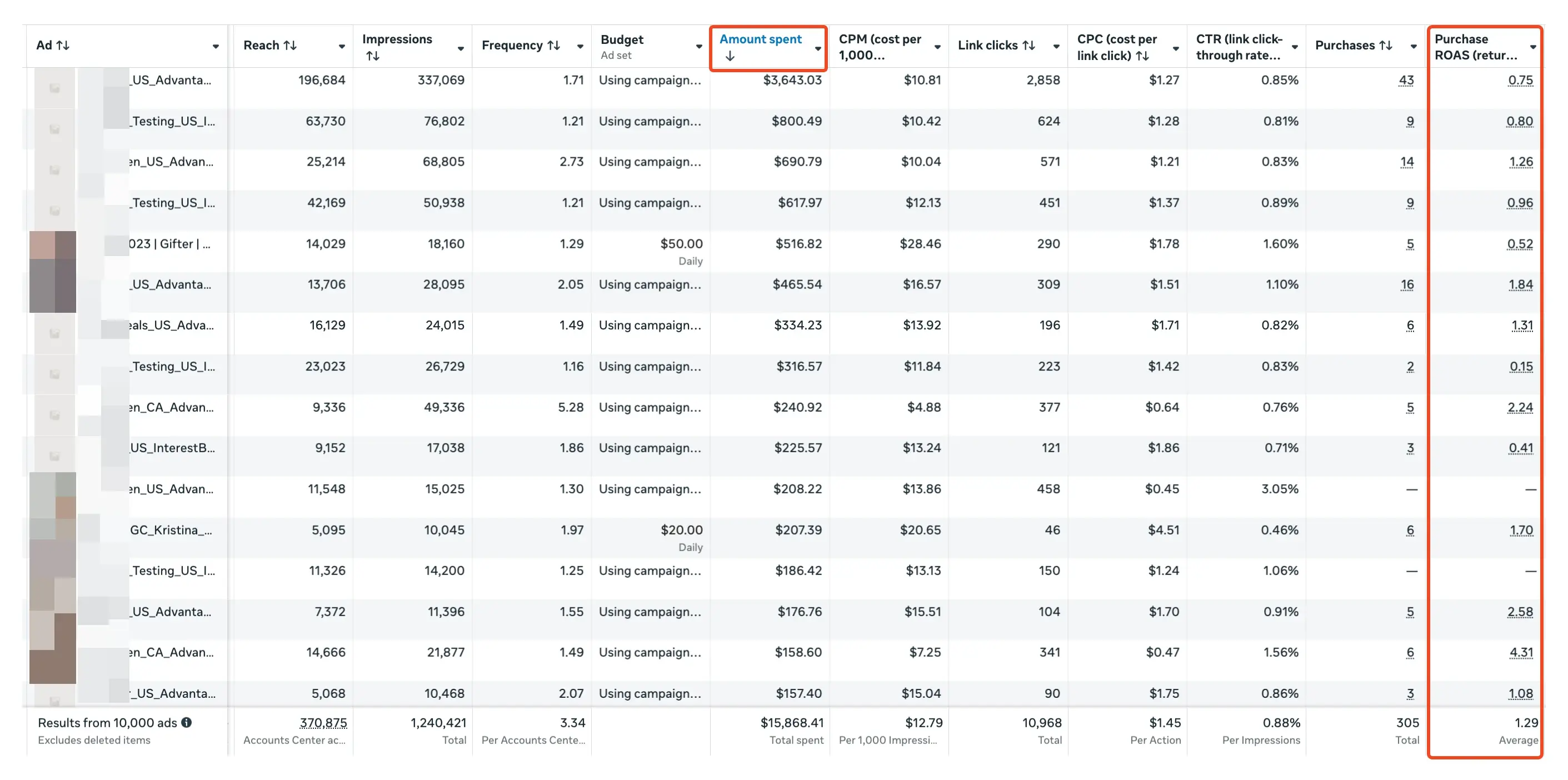
Before us, the client and previous agency followed a single pattern: promoting the same product, running the same creatives in a loop without real testing. This 'bestseller' actually delivered below-average AOV and below-target ROAS.

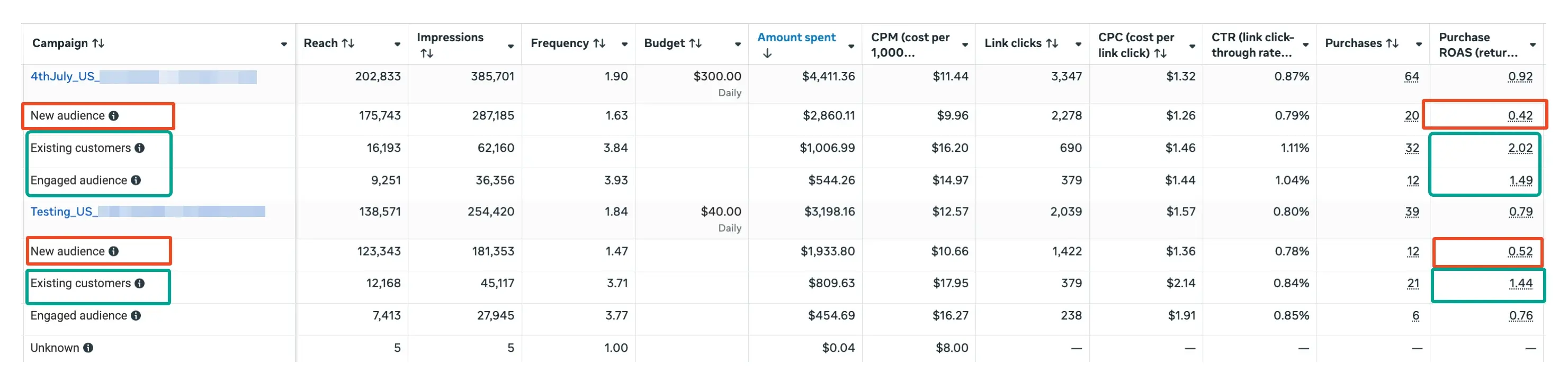
Meta was doing what's easiest for itself: continuously showing ads to warm audiences. Yes, warm buyers convert, but that's not growth — it's paying to show ads to the same people instead of acquiring new customers.

Meta Ads — results before start
Meta Ads — warm audience statistics

Meta Ads: results BEFORE and consequences of targeting warm audiences

We documented target audience profiles, pain points, and purchase triggers — translating them into messaging angles: anniversary gift (moon on wedding day), long-distance gift, memorial jewelry (remembering loved ones), self-gift. This became the foundation for our creative matrix.

Funnel Separation: Controlling the Customer Journey

We implemented a TOF/MOF/BOF structure to manage user attention at every stage. For cold audiences (TOF), we spark interest: showing creatives that hook attention and explain value 'from scratch'.

For those who showed interest (MOF), we build trust: showing videos with the owner, reviews, unboxings. And at the closing stage (BOF) — for cart abandoners — we use dynamic remarketing or special offers.

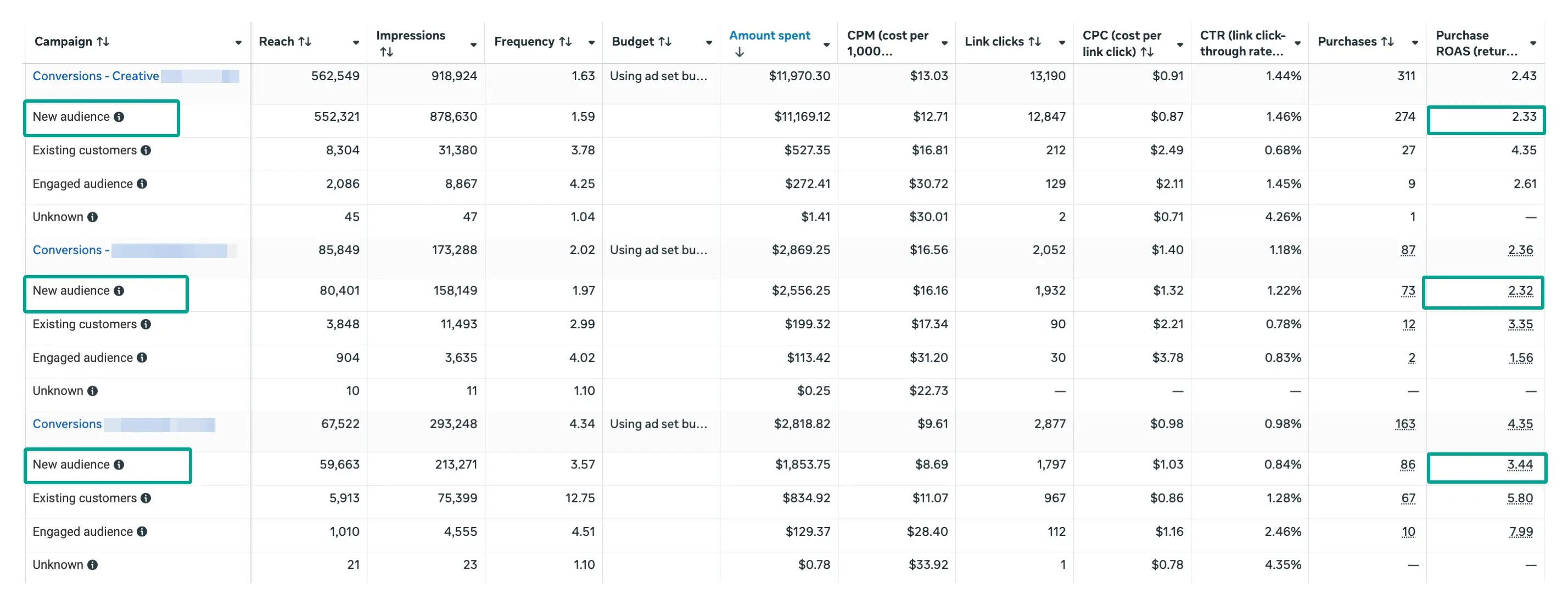
Thanks to this, we stopped wasting budget on showing ads to those who would buy anyway or those who don't need it. Cold audiences started getting more reach, ensuring an influx of *new* customers, not just squeezing old ones.

Effective engagement with new cold audiences

A correctly built campaign structure helped in attracting new customers

Testing New Products and Finding Best Approaches

The site featured about 200 products, but only one bestseller was driving sales while the rest sat as 'dead weight' in the warehouse. We launched Creative Testing to unlock the potential of these forgotten SKUs, testing various formats (product photos, lifestyle, video, UGC) and messaging angles based on our testing matrix.

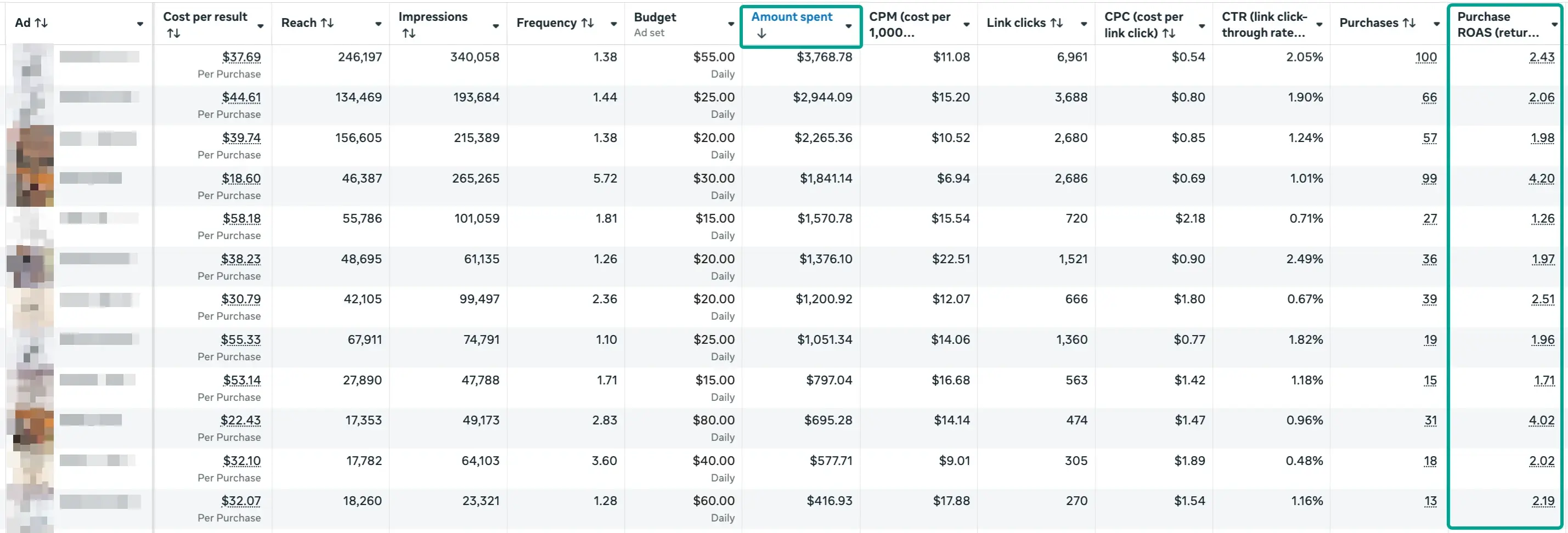
We identified real winners that the client hadn't even considered. Some were twice as expensive, which helped raise the average order value and significantly boost overall project profitability.

High-ROI SKUs with rapid sales velocity

Identified new profitable products with high ROAS that the client hadn't even considered

Scaling

When a winner was found — we created more creatives on winners (different angles, approaches, formats), tested new audiences. If a product showed strong performance — we started testing similar products, expanding the lineup of profitable SKUs.

For instance, we identified a product with a CVR exceeding 4% (against an account average of 2.2%). We immediately capitalized on this: developed banner variations, tested hypotheses, and eliminated underperforming elements. Our performance-driven approach: rapid identification → rapid scaling → rapid optimization.

Top creatives by spend
Top creatives ROAS

Top creatives — now profitable

But besides Facebook, we also started optimizing Google ads in the client's account — more on that below.

Google Ads: scaling without loss of profitability

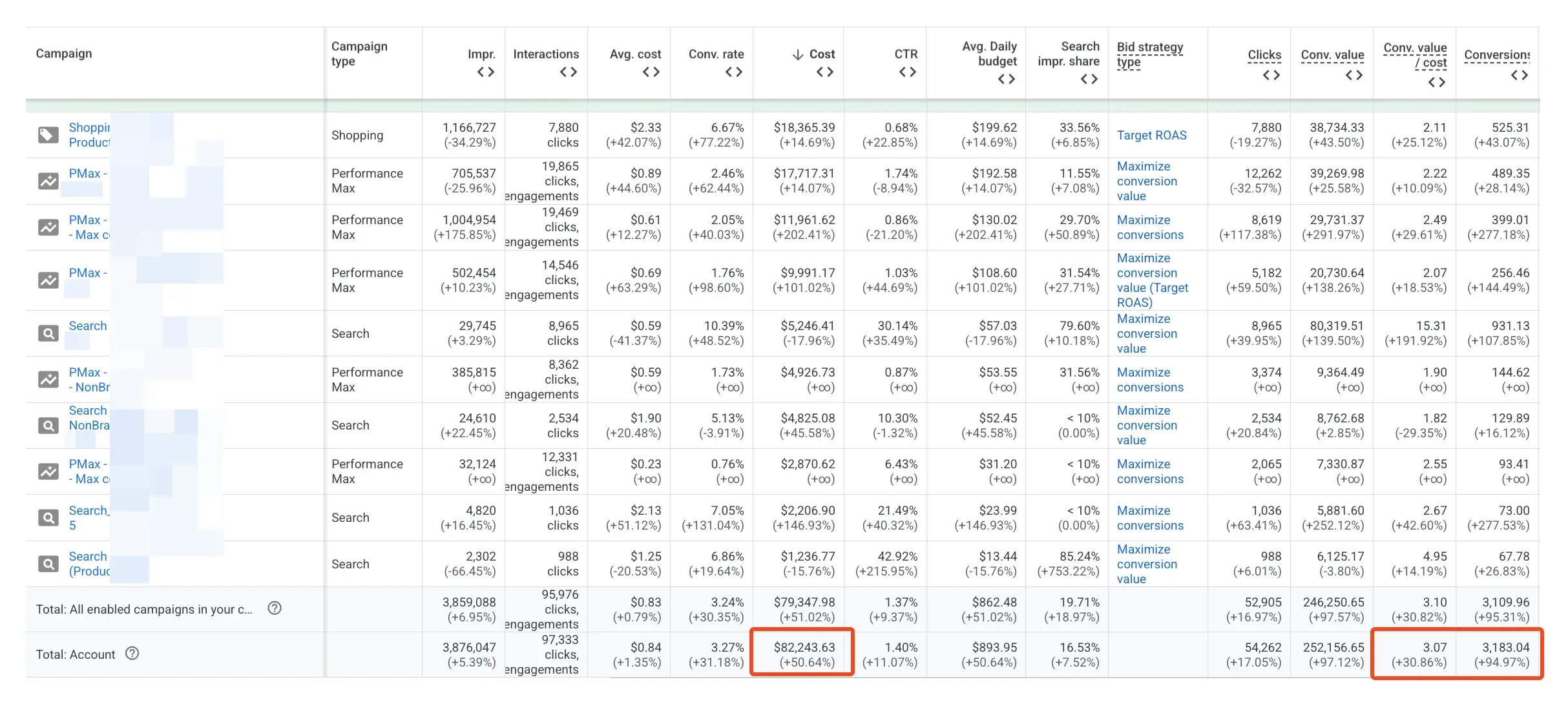
+50% Ad Spend, +95% Conversions, +30% ROAS

Initially, the account was running in 'safe mode.' Most budget was allocated to branded queries and retargeting. Cold traffic was unprofitable, and attempts to scale quickly caused the overall ROAS to drop. We needed to completely rebuild the structure so Google Ads would become a driver of new business, rather than merely capturing existing brand demand. You can see the results directly on the screenshot below.

Google Ads результаты: 3 месяца с нами vs 3 месяца без нас

Results Google Ads: 3 months with us vs 3 months before us

Cleaning and Restructuring Semantics

Audit showed significant budget was wasted on broad queries and junk placements (mobile apps, kids YouTube channels). Campaigns were 'draining' budget for nothing.

We conducted a total cleanup: added 4,200+ negative keywords and excluded over 15,000 inefficient placements. This allowed us to redirect budget from junk impressions to real buyers.

Separating Brand and Non-Brand

The main trap of PMax is brand cannibalization. The algorithm shows ads to those who are already looking for your store, claiming these easy conversions. The stats look pretty, but there's no business growth.

We launched a separate PMax (Non-Brand), strictly excluding branded queries. This gave us a true picture of cold audience acquisition costs and opened the door for real scaling.

One bidding strategy is rarely enough. A campaign on Target ROAS works cautiously, targeting high-intent users ('capturing high-value traffic').

To break the volume ceiling, we added a second campaign on Maximize Conversions with a limited budget. It works more aggressively and finds those users whom the first campaign considers 'too expensive', but who still convert profitably.

Structuring Asset Groups

Instead of dumping all products into one pile, we broke Asset Groups down by semantic categories: Rings, Necklaces, Bestsellers, Gifts.

For each group, we created unique text and visual creatives. Now a user searching for a ring sees an ad specifically for a ring. Relevance went up — CPC went down.

Scaling to Canada

The US market is huge, but competition is maximal there. We saw an opportunity for a Quick Win by expanding geographically to Canada.

We simply ported already proven successful setups to the new region. This gave an instant +15% sales boost while maintaining high profitability, as the auction in Canada is often less overheated than in the US.

Your business is capable of more. Shall we check?

An expert look from the outside often saves thousands of dollars. It's free.

Free audit includes competitor analysis, campaign optimization recommendations, and growth roadmap